NASA astronauts prepare for a one-million-kilometer journey to the Moon
Washington, January 17 (Hibya) – NASA is preparing to deploy the most powerful rocket it has ever built ahead of a mission that will, for the first time in more than 50 years, take astronauts on a 1,102,404.75-kilometer journey around the Moon and safely return them to Earth.
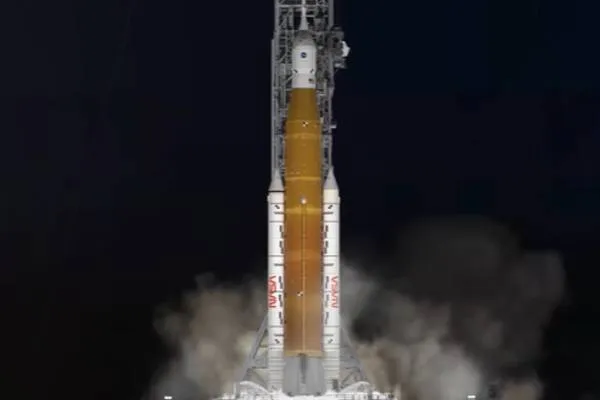
The Artemis II mission is scheduled to launch as early as February 6 from the Kennedy Space Center in Florida. It will take its crew on a 685,000-mile round trip and conclude with a splashdown in the Pacific Ocean after about 10 days.
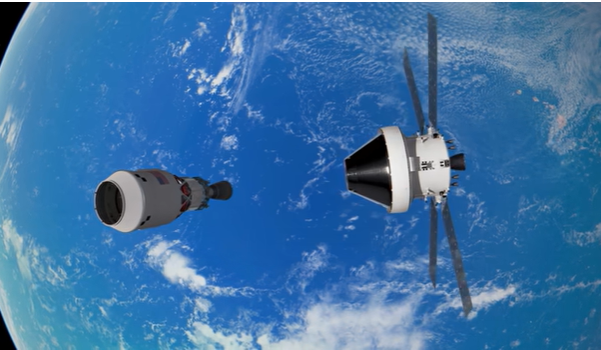
This flight will be only the second test of NASA’s Space Launch System (SLS) rocket and the first test with a crew aboard. Four astronauts will live and work inside the Orion capsule, testing life-support and communications systems and practicing docking maneuvers.
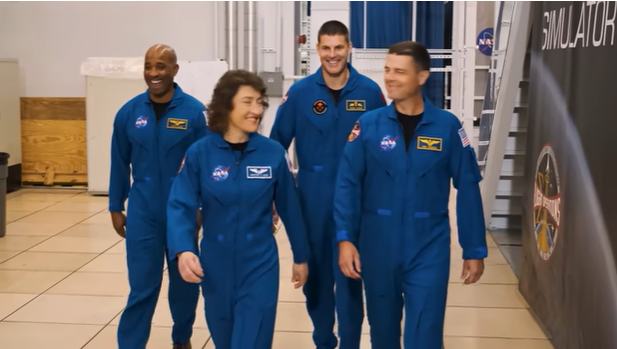
Billionaire private astronaut Jared Isaacman, who was sworn in as NASA administrator in December, said on Thursday that the mission is “one of the most significant human spaceflight missions of the past half century.”
This will be the second spaceflight for three NASA astronauts—Reid Wiseman, Victor Glover and Christina Koch—and the first for Canadian astronaut Jeremy Hansen. Koch will become the first woman to travel beyond low Earth orbit, while Glover will be the first Black astronaut to do so.
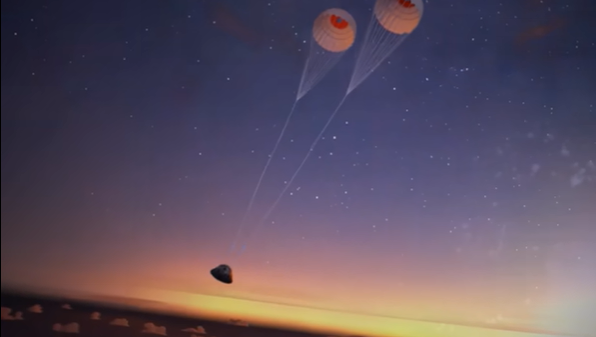
The astronauts will not land on the Moon or enter lunar orbit, but they will be the first people to travel around the Moon since Apollo 17 in 1972. The mission follows an uncrewed test flight in 2022 and paves the way for Artemis III, which aims to land astronauts on the Moon’s south pole as early as next year.
John Honeycutt, head of the Artemis II mission management team, said at a press conference on Friday: “These are the kinds of days we live for. It doesn’t get any better than this: we are making history.”
David Parker, former head of the UK Space Agency and visiting professor at the University of Southampton, said: “This is a hugely important event. It is a step toward what we have always dreamed of in the space world: sustained human and robotic exploration of the Moon and, one day, Mars.”
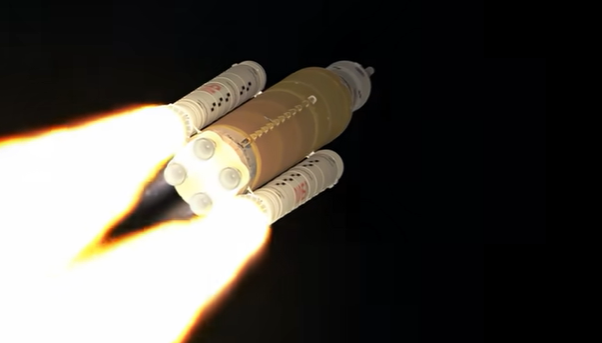
The SLS rocket and Orion capsule stand about 100 meters tall, and the rocket carries enough liquid fuel to fill an Olympic-size swimming pool. When ignited, the engines generate sufficient thrust to reach speeds of up to 24,500 miles per hour toward the Moon.
First, however, comes transportation. Early Saturday morning, NASA’s massive crawler-transporter 2 will begin moving the 5,000-ton rocket and spacecraft from the Vehicle Assembly Building to the launch pad. The 6-kilometer journey can take up to 12 hours.
NASA will then complete its pre-flight checklist. If everything goes according to plan, engineers will conduct a wet dress rehearsal by loading more than 700,000 gallons of fuel into the rocket, performing a test countdown, and demonstrating that the fuel can be safely drained.
British News Agency
 Facebook
 Tweeter
 Whatsapp