Putin: Caspian Sea is receding by an average of 9 centimeters a year
Moscow, October 9 (Hibya) - Russian President Vladimir Putin said the water level of the Caspian Sea is falling by an average of 9 centimeters a year, adding that over the past 20 years the retreat of the sea along Russia’s coastline has affected an area of 20,000 square kilometers. Putin called on the littoral states to work together to protect the sea’s ecosystem.
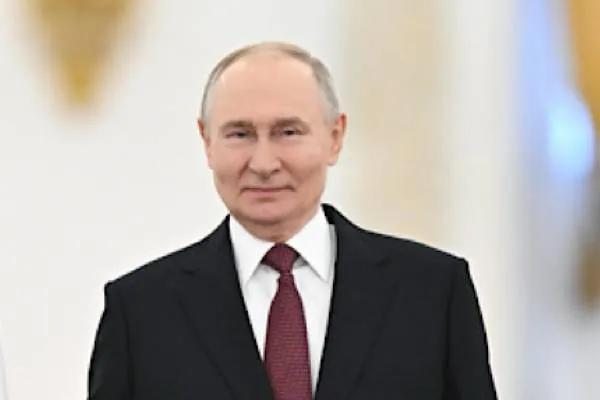
Russian President Putin, speaking at the Caspian Environmental Summit held in the Turkmen city of Turkmenbashi, drew attention to the environmental and economic effects of the decline in the Caspian Sea’s water level.
Putin said the initiative to hold the summit was timely and useful, noting that the Caspian Sea is of great natural, economic, transport, cultural and historical importance to all littoral countries. Putin said Russia gives priority to joint work with its partners to protect the Caspian Sea ecosystem, adding that governments, businesses, civil society organizations and experts are involved in these efforts.
Putin described the shallowing of the Caspian Sea as one of the most urgent problems and said that, according to Russia’s assessments, the retreat of the sea along Russia’s coastline over the past 20 years has reached an area of 20,000 square kilometers. Putin said Russia is forced to allocate significant budget resources to dredging every year in order to maintain maritime navigation.
Putin said the average annual decline in sea level is 9 centimeters, adding that if the current trend continues, it could result in a reduction in biological resources, damage to fisheries and soil erosion in coastal areas.
Putin said the decline in water levels is also negatively affecting socioeconomic conditions around the Caspian, reducing the investment attractiveness of Trans-Caspian logistics corridors and creating risks for employment and quality of life.
Putin said research by Russian and foreign experts indicates that climate change is the main factor behind the shallowing of the Caspian Sea, adding that rising average annual temperatures affect evaporation, rainfall levels and the flow of rivers entering the sea.
Putin said changes in wind patterns are also worsening the process. He noted that air masses that previously came from the Atlantic Ocean have been replaced by hot and dry air flows from Central Asia, increasing water evaporation.
Putin proposed making more effective use of existing international mechanisms to protect the Caspian Sea ecosystem. In this context, he highlighted the importance of the Framework Convention for the Protection of the Marine Environment of the Caspian Sea, adopted in 2003 and also known as the Tehran Convention.
Putin said that at the conference of the parties held two weeks earlier in Tehran, the capital of Iran, an agreement was reached to quickly finalize an action plan on changes in the Caspian Sea level to be implemented through 2036. He added that Russia also supports the preparation of a special protocol for monitoring the Caspian Sea.
Putin emphasized the importance of making information-sharing on environmental risks among Caspian countries systematic and creating a joint response mechanism for such risks.
Putin announced that Russia has prepared a comprehensive program running through 2030 to study changes in the Caspian Sea’s water level and reduce their negative consequences, saying the research results will be shared with neighboring countries.
Putin also proposed creating a “digital twin of the Caspian Sea” that would use artificial intelligence algorithms to analyze data on evaporation, precipitation and river flow. He said the virtual model could be used to calculate scenarios for changes in sea level and that the system could also help update navigation routes and improve maritime transport safety.
Putin said Russia is ready to continue cooperating with other Caspian countries on the efficient use of water resources and called for joint work in areas such as reducing water losses, modernizing irrigation systems and digitalizing water management.
Putin also announced that an international educational program on the study of the Caspian Sea would be launched at Russia’s Sirius National University of Science and Technology. He said the program aims to enable young specialists to study issues in ecology, economics and innovation, and invited young people from Caspian countries to participate.
The summit, hosted by Turkmenistan President Serdar Berdimuhamedow, was also attended by Azerbaijani President Ilham Aliyev, Iranian President Masoud Pezeshkian and Kazakh President Kassym-Jomart Tokayev. During the summit, Putin also held separate meetings with the presidents of Azerbaijan and Iran.
British News Agency
 Facebook
 Tweeter
 Whatsapp