A World First: Turkish Güven Hospital performed surgery with a mobile MRI device
Güven Hospital became the first center in the world to actively use an artificial intelligence-supported mobile MRI system during surgery.
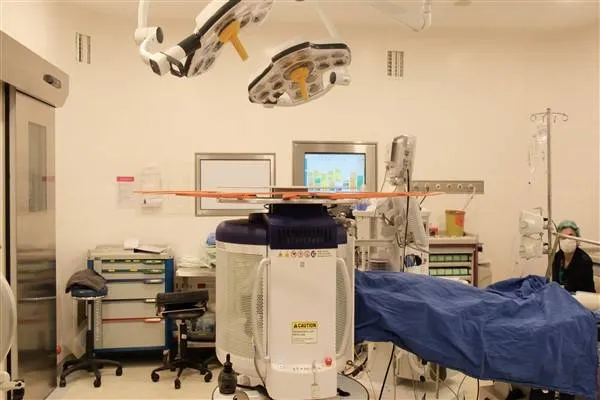
Güven Hospital put into active use in the operating room a mobile MRI system that combines ultra-low magnetic field technology with an artificial intelligence-supported imaging infrastructure. The system, which enables imaging while an operation is ongoing, especially in brain surgeries, has opened the door to a new era in surgical processes.
Prof. Dr. Hakan Emmez, Head of the Department of Brain and Neurosurgery at Ayrancı Güven Hospital, said that the use of mobile MRI technology not only in intensive care and critical patient management but also during surgery is a remarkable development worldwide.
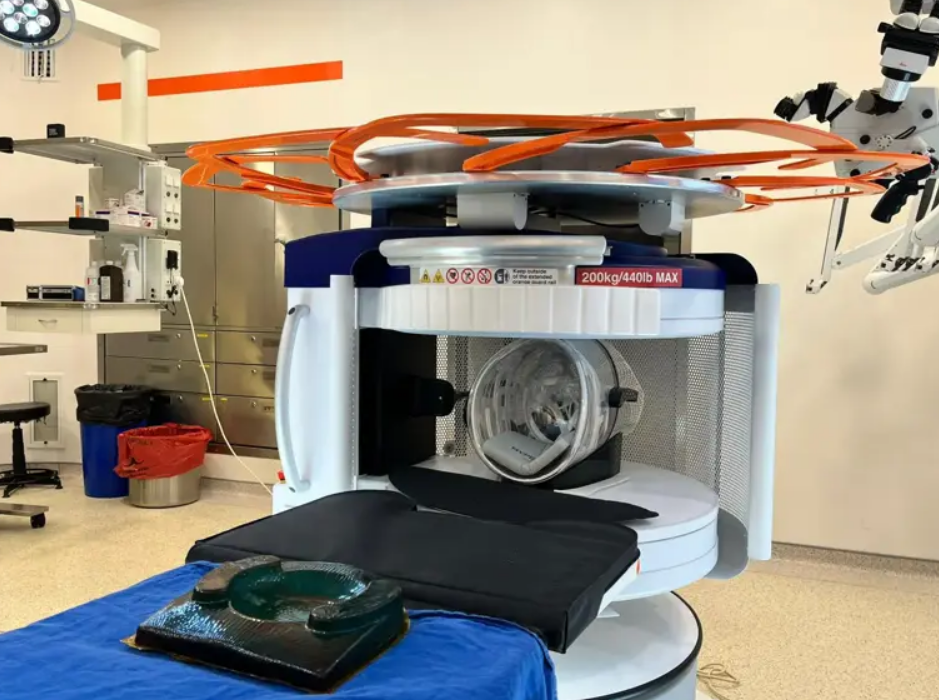
“It is moved to the patient’s bedside”
Prof. Dr. Emmez stated that, unlike standard MRI systems, this technology can be moved to the patient’s bedside and said:
“Until now, we used to take the patient to the device for MRI imaging. The mobile MRI system completely changes this approach. Since it uses an ultra-low magnetic field, we can move the device directly to the patient’s bedside like an ultrasound system. This provides a major advantage especially for intensive care patients, pediatric patients, or critical cases whose transfer is risky.”
Emmez emphasized that one of the most important differences of the mobile MRI system is that it offers safe use for patients with implants, noting that many patients who cannot undergo conventional MRI can be imaged thanks to the low magnetic field.
“In standard MRI devices, it is not possible to image some patients with implants due to the high magnetic field. The mobile MRI system offers an important alternative at this point. Thanks to AI-supported image processing technologies, the quality loss caused by the low magnetic field is largely balanced. Although it does not provide exactly the same quality as a standard MRI, we can obtain images that are extremely safe, fast, and sufficient for clinical decision-making processes.”
“We are the first center to use this system during surgery”
Prof. Dr. Hakan Emmez stated that mobile MRI technology was developed worldwide mainly for intensive care use, but at Güven Hospital this system was integrated into surgical processes for the first time.
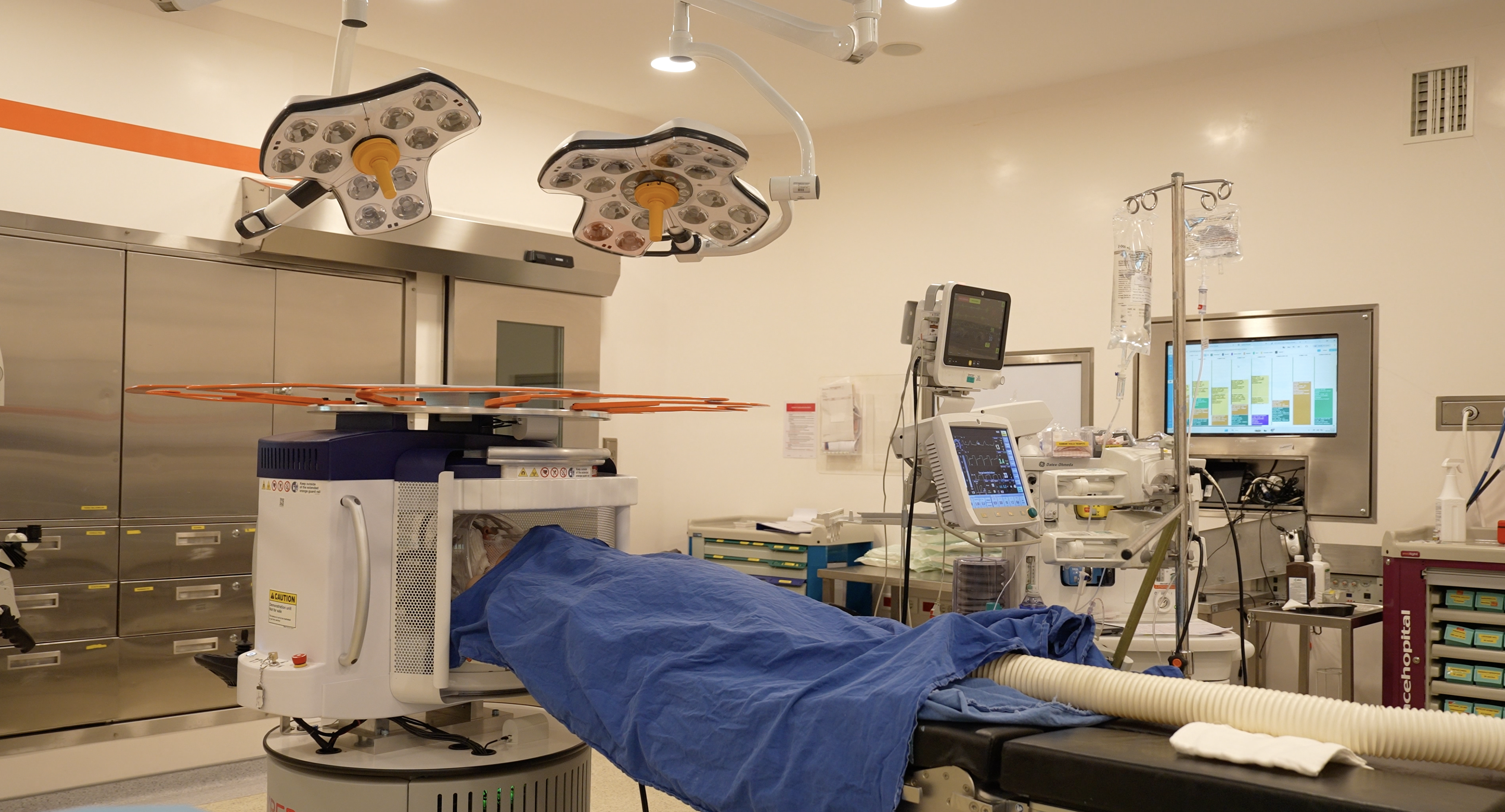
“This technology was initially developed for intensive care patients who cannot be transported to MRI. However, we have actively used this system in nearly 30 brain surgeries. While the patient is still on the operating table, we can perform imaging without ending the operation. We bring the MRI device directly to the patient’s head, take new images during the surgery, and instantly evaluate whether any tumor remains in areas that are difficult to see with the naked eye. The results we have obtained are extremely successful. As far as we know, we are the first center in the world to use this system for surgical purposes.”
Pointing out that mobile MRI increases surgical safety especially in tumor surgeries, Emmez said it allows the surgeon to reassess decisions during the operation.
“In some brain tumors, evaluating the remaining tissue during surgery only with a microscope image may not always be sufficient. Thanks to mobile MRI, we obtain new images while the operation continues. Thus, before ending the operation, we can see whether an additional intervention is needed. This increases both surgical quality and patient safety.”
It can also provide an advantage for patients with fear of enclosed spaces
Prof. Dr. Emmez stated that the mobile MRI system also offers a more comfortable experience for patients with claustrophobia.
“In conventional MRI devices, patients enter a large and closed tunnel. In mobile MRI, however, there is a smaller system in which only the head area is placed. Therefore, it can offer a more tolerable structure for patients who experience fear of enclosed spaces.”
Emmez stated that the mobile MRI system has a wide range of uses, from trauma patients to intensive care cases, from pediatric patients to intraoperative imaging, and said that developments in health technologies are critically important for patient safety.
“Development in healthcare now progresses largely through technology. What matters is being able to use these technologies in the right place and effectively. By integrating this technology into clinical practice in the field of brain surgery, we aim to further advance patient safety and surgical quality.”
 Facebook
 Tweeter
 Whatsapp