Syrian government forces deployed to Latakia and Tartus after clashes
Stockholm, December 29 (Hibya) – According to Al Jazeera, Syrian government forces were deployed to the coastal cities of Latakia and Tartus after protests led to deadly clashes in which at least three people were killed and 60 were injured.
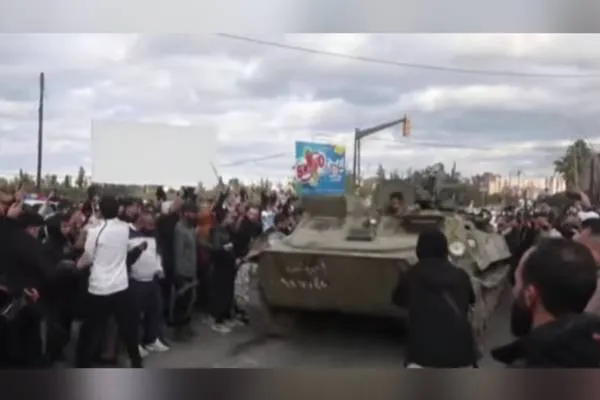
This is the latest bout of unrest to test the newly formed government of President Ahmed al-Shara, which is striving to stabilize the country and reintegrate internationally after 14 years of a devastating civil war.
Syria’s Ministry of Defense said on Sunday that, in response to attacks by “outlaw groups” on civilians and security forces, army units equipped with tanks and armored vehicles entered the centers of cities in the west of the country to restore stability.
Syria’s state news agency SANA, citing officials, reported that the attacks during protests in Latakia were carried out by “remnants of the dissolved regime” of former President Bashar al-Assad.
SANA said 60 people were injured as a result of “stabbings, stone-throwing and armed attacks” targeting both security forces and civilians.
Clashes were reported to have broken out when demonstrators faced off against pro-government demonstrators, and masked gunmen opened fire on security forces.
The Interior Ministry said in a statement that a police officer was among the dead. Al Jazeera’s team confirmed that Syrian security forces came under fire at the Azhari junction in Latakia, and also reported that in Tartus unidentified assailants threw a grenade at the al-Anaza police station in Baniyas, injuring two security personnel.
Violence flared again on Sunday when thousands of Alawite Syrians took to the streets in the central and coastal regions—heartlands of the religious minority—to stage protests against violence and discrimination.
The protests had been called by an Alawite cleric living abroad, Ghazal Ghazal, after a deadly bomb attack on a mosque in Homs on Friday, urging people to “show the world that the Alawite community cannot be humiliated or excluded.”
The bomb attack, which killed eight people and was claimed by a Sunni group known as Saraya Ansar al-Sunna, was the latest act of violence against the religious minority to which ousted former President Assad belonged and which held significant influence under his rule.
Protesters also demanded that the government implement federalism—a system that would move power away from centralized rule in Damascus and grant minorities greater autonomy—and called for the release of Alawite prisoners.
British News Agency
 Facebook
 Tweeter
 Whatsapp